
Good Bad Ugly
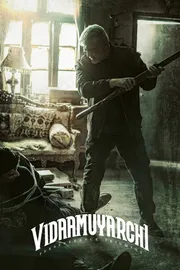
Adhik Ravichandran's cinema is a genre unto itself—it's not so much a film as a rave party. And like all parties, some are more intoxicated than others.
Full review ↗6.0
TRM 5.6+0.4
The Hindu, Cinema Express, New Indian Express
Reviewing since 2014 · Last review Apr 2025
Films
Scoring fingerprint
27 scored reviews · 0–10
Most given: 6 (10 reviews)62% of reviews not scored
In step with the room
Within a point of the Monk Score on 96% of 24 films
Divergence
From the archive
Adhik Ravichandran's cinema is a genre unto itself—it's not so much a film as a rave party. And like all parties, some are more intoxicated than others.
Full review ↗TRM 5.6+0.4
Test is a strangely hollow game that fails to explore the interiority of its characters, leaving viewers with a superficial experience that lacks depth and meaningful engagement.
Full review ↗TRM 5.3−0.3
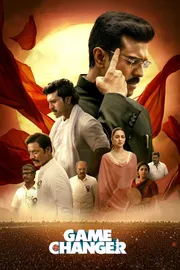
With the first half, the seeds of a genuinely good film are sown. But in the second half, the film settles for a combination of standard action beats, a road that is more familiar, a road not so full of narrative joys or surprises.
Full review ↗TRM 6.3+0.7
Perhaps it's the repetition of certain ideas, or perhaps it's the undeniable power of Shankar's hit cinema, but it's impossible not to think of his earlier work
Full review ↗TRM 5.4−0.4
TRM 6.5+0.5
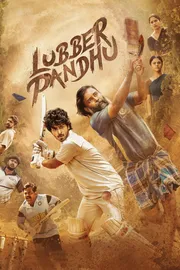
This sports-drama bowls you over with all-round excellence. Many unexpectedly refreshing moments in Lubber Pandhu combine to elevate the film.
Full review ↗TRM 7.3
This groundbreaking, frightening film incites much reflection. It will be a long time before I forget the eyes of Meena (Anna Ben). Hers is a stare of defiance, a stare at nothingness.
Full review ↗TRM 7.2
Pa Ranjith really knows how to create a world. Never once during Thangalaan do you doubt the authenticity of its period setting—of clothes, of language, of behaviour.
Full review ↗TRM 6.2−0.2
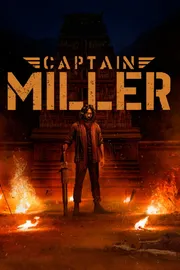
For all these positives, somewhere along the way, the focus on the individual and the intimate gradually dissipates as the film tries to tackle the collective. For all the big tragedies unfolding, including systematic oppression and genocide, the emotions—the eventual catharsis—needed to register better. While Captain Miller doesn't resonate as emotionally as his previous films did, his admirable signature and conviction is still all over this film.
Full review ↗TRM 6.6−0.6
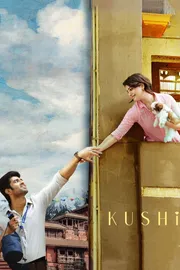
Viplav and Aradhya are not easy to feel for. While the film takes on an ideological struggle between militant atheism and extreme theism, what we end up getting is more unlikeable people into this world. This film about an ideological clash offers little to reflect on—and this story about dreamy-love-leading-to-marital-distress creates little emotional resonance.
Full review ↗TRM 5.0−1.0
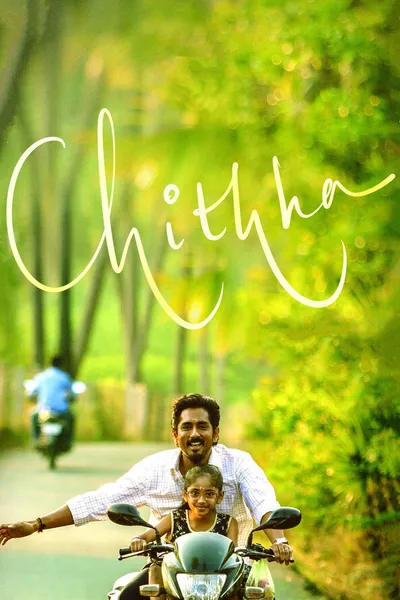
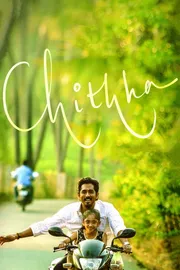
With Chittha, director Arun Kumar delivers a sensitive, powerful film that breaks conventional rules of heroism, full of surprises—pleasant and dark, satisfying and terrifying—while standing by its women and asking tough questions of its men through earnest performances and a remarkably poetic yet realistic eye for human behaviour.
Full review ↗TRM 7.1+0.9
It's a time in our cinema when talented filmmakers like Madonne Ashwin are showing that they are unafraid of punching up. This film asks questions of slum resettlement policies and how they are executed, while not losing sight of being an accessible entertainer... there's so much to like—including how the voice-overs are never allowed to get tedious or monotonous—that I have no hesitation forgiving it for the lapses.
Full review ↗TRM 6.9+0.1
What truly comes through Thunivu is that H Vinoth cares, and I think that augurs well at a time when we could do with braver voices willing to take on oppressive systems. For every forgettable exchange of bullets, there's a dialogue that's fiercer, making it hard to be unforgiving of Thunivu, even despite all the flab.
Full review ↗TRM 5.8+0.2
Fascinating ideas don't translate into exciting storytelling in this Samantha-led actioner. It's impossible to shake off the realisation that Yashoda should have been a far, far superior film, given the weight of these ideas. A big problem is how unconvincingly these ideas are fleshed out.
Full review ↗TRM 5.3−0.3
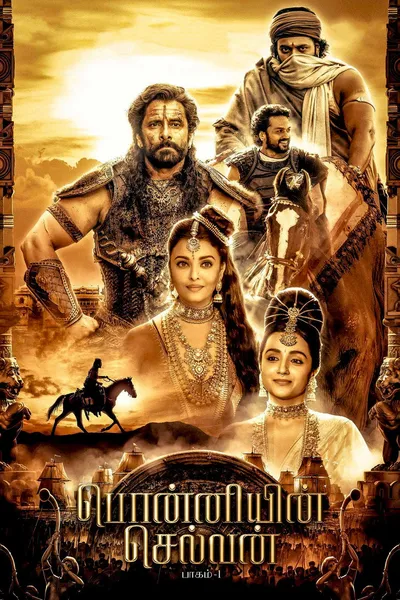
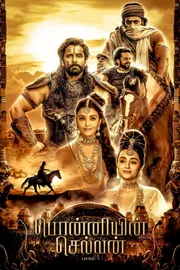
Perhaps the foremost pleasure of a Mani Ratnam film is in experiencing his wizardry over the medium. We see plenty of evidence of this in Ponniyin Selvan 1. There's great pleasure in seeing what once was. There's greater pleasure in experiencing AR Rahman climb into this film and deliver the type of songs and score he seems to always summon for this filmmaker for whom he made his debut.
Full review ↗TRM 7.2+0.8
When a film like Liger just flings cliches at you without any real effort to make them work, all that's left to do is try and see whether you can at least summon a laugh or two at the film's expense. The kicks and punches in Puri Jagannadh's weakly written Liger seem directed at us.
Full review ↗TRM 2.8+0.2
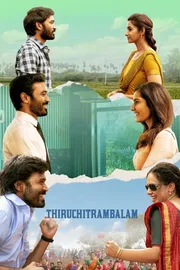
I liked Thiruchitrambalam for how it mostly resists easy temptation to sink into melodrama. These are such wonderful, understated portions in this film—and THIS is really why I don't get the sudden turn into ill-advised melodrama towards the end. It's tragic really when a film, on the cusp of excellence, makes a dated choice that ends up leaving a sour aftertaste.
Full review ↗TRM 6.8−0.8
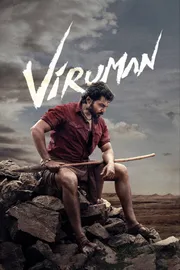
An uninventive, lifeless film that's peppered with unintended humour. Director Muthaiya's latest template exercise is that sort of film—it allows you time for plenty of casual musing, while it goes about checking the usual boxes. Good films keep you invested enough to not notice the formula of it all, but in films like Viruman, the dull blueprint screams at you to be noticed.
Full review ↗TRM 4.6−0.6
One of my favourite aspects of Gargi is its interest in keeping things real and intimate. It's a film that doesn't want to be cinematically manipulative. Gargi, the film, is an example of quality cinematic craft with a clever script elevated by invested performances and an assured director at the helm.
Full review ↗TRM 6.8
The violence is all tastefully shot and inventively choreographed, but after a while, it began ringing a bit hollow. Vikram is largely content to capture the carnage. It looks good, but I'm not sure it feels as good as a Kaithi did.
Full review ↗TRM 6.5−0.5
Don is a celebration of the college spirit, and for the young, it's timely, while for the old, it's a whiff of good ol' nostalgia. The film has the exterior of a fun, college film, but its core is made of solid emotion, and despite lacking finesse and novelty, it succeeds as an effective entertainer.
Full review ↗TRM 6.00.0
I found quite a bit about Hey Sinamika to be refreshing... and these films, with their focus on interpersonal relationships, come as a welcome departure from all the star-worshipping. However, the film's end left me fighting a bitter aftertaste, and it opts for the safer route rather than creating an unlikely resolution.
Full review ↗TRM 5.4
This film, that mounts opposition to the vilification of Muslims, is a smart entertainer, devoid of 'commercial compromises'. Maanaadu accomplishes a clever cat-and-mouse game between the hero and the villain, and it is evidently a result of much writing work. If stars collaborating on a project results in mainstream cinema like Maanaadu—punctuated by clever writing, enjoyable humour, progressive politics—there may just be a star system I could potentially make my peace with.
Full review ↗TRM 6.9
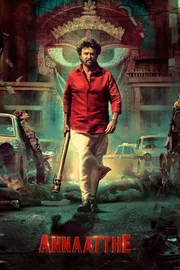
The beginning portions of Annaatthe are straight out of enjoyable Rajini films from the 90s, but the film misses a glorious opportunity in its latter portions where the ones who are being vanquished are fairly nondescript, so their destruction isn't as cathartic. Annaatthe might have been better served with a final scene that establishes happiness and joy among the characters, as opposed to its rather downing end.
Full review ↗TRM 3.9
For all these missteps that prevent Jai Bhim from being an unforgettable film, it's still necessary to note that this is an important film that documents, with passion and good intentions, the oppression of a community. It's a film co-produced by a star, who's brave enough to almost slide himself into the background.
Full review ↗TRM 7.2−0.2
It's a horror-comedy, but I laughed very little. As for the horror, the real scare comes at the end when they hint at a sequel. The film runs out of steam shockingly soon though, and while the premise itself is interesting, the writing simply lacks the imagination needed to draw humour or pathos.
Full review ↗TRM 4.7
With Sarpatta Parambarai, Ranjith continues to jab at Indian mythology, while throwing strong punches at anyone who doesn't stand for equality. Sarpatta may not be his best work yet; it may not exactly thrill as a sports film; but Ranjith's film is yet again compelling, and it's yet again important.
Full review ↗TRM 6.4+0.6
Jagame Thandhiram is too frivolous to be serious, too serious to be fun. Karthik Subbaraj tried to fuse two different films together—a solemn immigrant drama and a globe-trotting gangster film—and in doing so, created a film in which one story doesn't really allow the other to thrive. I'm convinced that Jagame Thandhiram is Karthik Subbaraj's weakest film yet.
Full review ↗TRM 5.0
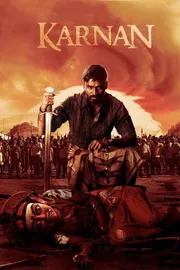
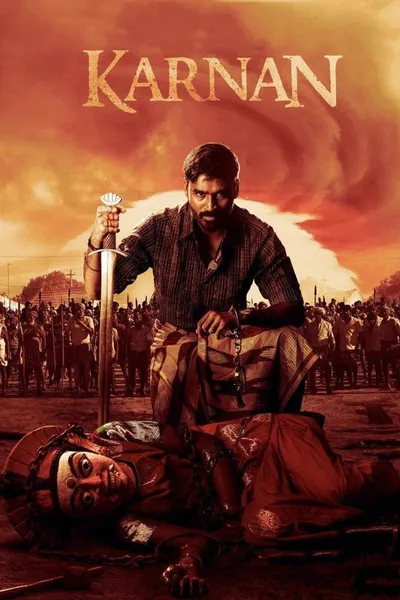
A deeply affecting, artistically fulfilling film, Mari Selvaraj's second film confirms that we can expect great things from this director. Karnan is a tearful dance, and with this film, Mari Selvaraj establishes for a second time that he has all the markings of a masterful filmmaker.
Full review ↗TRM 7.7+0.3
It's a film that has heart and that encourages empathy towards those around us, and if possible, to note that magicality doesn't need to be thought of an otherworldly trait, if only we cared to pay more attention to the beauty around us. Nevertheless, some inconsistent performances and some synthetic moments stop it from being truly great.
Full review ↗TRM 5.9+0.1
The abundant depth and entertainment on offer in Soorarai Pottru, I view as being a direct consequence of the unrelenting honesty of its writing and performances. Soorarai Pottru is the whole package really—a film with character purpose across the board, incisive dialogues, great performances, and much empathy and sensitivity to boot.
Full review ↗TRM 6.5+1.5
For a film about a buried crime that gets unravelled after an old case is reopened, the court proceedings feel frustratingly spurious. The film deserves credit for taking on an uncomfortable topic, an important one, but I'm not sure 'thuninju nil' cuts it—not in a film that wants to be a layered courtroom drama.
Full review ↗TRM 4.8
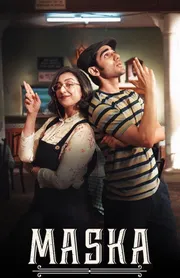
Given its deceptively interesting beginnings, you'd never guess how low Maska would go on to fall. The idea is interesting, but the execution yields disastrous results.
Full review ↗TRM 5.8
The big twist of the film that comes out of nowhere almost made me burst into laughter. There is no build-up, no effort at developing flesh around the twist to make it believable when it comes.
Full review ↗TRM 3.9
I just wish that the film had been a lot more fun, and perhaps, less preachy. But that's like wishing that a chocolate-dipped peanut butter cup-stuffed Oreo were less sweet. It is what it is, and you'll love it if you have the taste for it.
Full review ↗TRM 5.7
Train to Busan brings absolutely nothing new to the zombie genre, but it shows that lack of novelty needn't be a handicap at all. It has everything you'd expect in a zombie film: The close calls, the mass slaughters, the long chases. A lot of it is quite beautifully shot.
Full review ↗TRM 7.0
As is only expected of a film that deals with a disorder, a narrator explains at the end that autism—which is what Chris supposedly suffers from—affects a sizeable percentage of the population, and tries to encourage sensitivity towards the condition. But considering that Affleck's character almost romanticises it as a superpower, the narrator may well have not bothered.
Full review ↗TRM 5.5
It isn't that The Magnificent Seven is a bad film. It's made quite competently, and with much deference to the original — or should I say, originals. But the Seven here aren't just magnificent enough. Fuqua's film is to the original what a Colt revolver is to the Gatling gun.
Full review ↗TRM 5.6
Thanks to Sully, I now know — as much as there is to be known safely at least — what it must be like to be part of a incapacitated plane. Isn't that why we go to films, after all? So, we can live the compelling lives of others… at least briefly.
Full review ↗TRM 6.7
Much of what happens in Skiptrace appears manufactured; the dialogues are no exception.
Full review ↗TRM 4.3
You can survive it for a while, but you'll never outlive it. Towards the end, the villain finally wakes up to the folly of picking The Mechanic as his adversary (remember The Dark Knight line?), but I wasn't at all sure why Arthur needed to wait so long to rescue Gina. Then, I looked down and understood. The omniscient Arthur was just giving us time to finish the popcorn.
Full review ↗TRM 4.7
This lack of depth gets exposed calamitously during the latter half when the film's veil of comedy drops; even Jonah Hill fails to make it all seem engaging. This likely explains the casting of Bradley Cooper, who, I'd guess, was paying off a debt. There can be no other reason for his deciding to play the role.
Full review ↗TRM 6.0
I didn't understand why Bourne, after taking down the main adversary, still had to go on a never-ending chase to take down a lesser threat, the CIA's asset, who takes control of a S.W.A.T truck and plays his version of Carmageddon on the roads of Vegas. But by this time, the film is simply going through the motions and hurtling in auto-pilot mode towards its rather predictable end.
Full review ↗TRM 5.5
What Marvel achieved by painstakingly releasing film after film to establish its superheroes, DC tries to do with hyper-stylised minute-long intros for the dozen characters that populate—no, crowd—Suicide Squad.
Full review ↗TRM 5.1
The BFG is the closest a film has come in a long time to waking the child inside.
Full review ↗TRM 6.3
Towards the end, there's something about magnetic rocks getting dropped into a volcano, but I'd lost all patience and could only keep going back to that opening scene in which Sid shares his dating philosophy: "Love them and leave them."
Full review ↗TRM 5.1
The Secret Life of Pets won't stay with you for long, but while you're watching it, it's impossible to ignore.
Full review ↗TRM 5.9+0.1
TRM 5.1
Central Intelligence is a high-school chick flick, and rather fittingly ends at a high-school reunion, in which Robbie, for some reason, has to parade himself naked in order to get over the traumatic bullying incident that has scarred him for life. I wasn't sure what the big metaphor here was, but I'm pretty sure his last name, Wheirdicht, had something to do with it.
Full review ↗TRM 5.7
Though there's a twist at the end concerning the identity of the demon, the film is bogged down by large unmemorable portions that hardly make you sit up. The Conjuring may have gotten away with its over-reliance on jump scares, but the sequel gets exposed. It doesn't take long before you realise that the film needed to be much more than just another case from the Warren stable.
Full review ↗TRM 5.7
That's native, organic humour, but there isn't a lot of that in Miruthan, which suffers from the same malady that afflict many bad Tamil films: needless, forced melodrama, and a distinct lack of subtlety. I think it's safe to say that we still don't have our first zombie film.
Full review ↗TRM 5.3
With the exception of a few jokes, mainly in Kutty's track, Bangalore Naatkal is a faithful remake.
Full review ↗TRM 5.2
There's pretty much nothing in Rajini Murugan that will even startle you, let alone blow your mind. It's everything you've seen already, but you know the thing that differentiates stars from actors? They're able to take your mind off the silly story; they're able to make you forget that the plot is flimsy, that the songs (even if catchy) are excessive, that the love story is regressive.
Full review ↗TRM 5.6
But Gethu is definitely a welcome relief for those of us who wondered how long Udhayanidhi would go on with comedies that relied not so much on him, but the comedian, usually played by Santhanam. Though Karunakaran plays that role here, he's more a character artiste than a comedian — another welcome relief.
Full review ↗TRM 4.8
Maalai Nerathu Mayakkam is what happens when Prabhu and Manoja are brought together by means of an arranged marriage.
Full review ↗TRM 5.6
The time-tested I'll-abduct-your-close-ones method was after all used in a film like Run, that released 13 years ago. And oh, somebody should really tell filmmakers that it's completely all right to not cast a heroine when she has nothing substantial to do, like Shruti Haasan in this film. In comparison, Nagma's seems like a plum role in Baasha. And that's saying something.
Full review ↗TRM 4.8
Almost all the jokes, both subtle and loud, work. And they're everywhere, and often admirably, without heed to political correctness.
Full review ↗TRM 5.8
The end — like the beginning — adopts an atypical, downbeat note, as the camera again slinks back into the sky from where it originally descended for the opening scene. But for what Paayum Puli actually is, they may as well have began and ended amid kuthu beats and much fanfare.
Full review ↗TRM 5.3
NPNO is an admirable film, mainly for its irreverence to elements that are typically thought of as being forced by producers. There's no big climactic duel at the end. There's just the one duet in the whole film, and even that is shot as a parody of a song from the black and white era, as if to say that it is in that time that such love songs firmly belong.
Full review ↗TRM 4.7
Inimey left me feeling good about having watched the film, mainly because Santhanam remembers that he is more thamaasu than maasu.
Full review ↗TRM 5.3
...despite a great cameo by Harrison Ford as Ellis' father, The Age of Adaline quickly tapers off into a regular rom-com. I liked The Age of Adaline when much wasn't happening— when she's simply strolling and just being; when she's looking at a park bench and remembering a 50-year-old memory and shedding a tear; when she's looking at news and remembering an old tragedy that she was part of; when she's looking at all her old pictures of King Charles spaniels.
Full review ↗TRM 5.3
The acting isn't the problem; the predictable story is. The thaali sentiment is revived for some reason. Kanchana-2 may get away with such ideas, but Kanchana-3, which is hinted at before the end credits, needs to do better if the franchise has to survive. It'd be a pity if it didn't.
Full review ↗TRM 5.5
Also, in such a film where there's no question of a dark ending, what's the point of a lengthy will-he-wont-he sequence towards the end? He will; of course, he will. In these films, he always does. Give me the darned jokes I paid money for. That's the main problem with Nanbenda — they never come.
Full review ↗TRM 5.5
If the director had avoided the temptation of including 'necessary commercial elements', Katham Katham would have been a quality film. But as Pandian, almost as if he were speaking on the director's behalf, says, "Awards venaam. Collection vandha podhum."
Full review ↗TRM 4.5
Anegan, on the whole, is a complex story told simplistically. Had the complexity been retained, and had the masala spoon been of a lesser size, it would have made for a great film. For now though, it will have to satisfy itself with being a hit film.
Full review ↗TRM 5.9
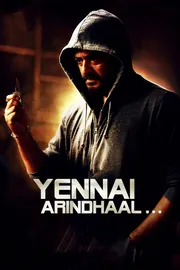
A rushed climax, a problematic organ trafficking angle, a repeated plot device, a predictable ending… and yet Yennai Arindhaal comes as a breath of fresh air, especially at a time when big-budget films haven't quite lived up to their hype. There's just that one melisaana kodu that stops it from being terrific.
Full review ↗TRM 6.5
There's no message here, just like how the main characters are friends for no particular reason. As the film asks before displaying its title card: Who needs a reason to be friends? Director Karthik G. Krish, however, understands that while friendship may not need reasons, humour definitely does. And there's plenty of that in the film.
Full review ↗TRM 5.6
Ra also shows good production values (especially in its VFX), and that's more than you can say about many other small films that have released recently. The flaws are mainly in the writing.
Full review ↗TRM 5.6
However, despite these inspirations, there are quite a few genuinely enjoyable moments in the first half of the film, one in which it hasn't yet stepped into hero-has-to-rescue-heroine territory.
Full review ↗TRM 5.7
As you walk out, you can't but wonder if the director, after noting all the laughter at the end, rues his decision not to have made a full-fledged comedy.
Full review ↗TRM 5.4
Poojai, despite not being Hari's best, could still be successful in the B and C centres, and affirm his bankability. The writing is generally not well thought out though. It seems almost like groups of imperfect scenes were put together in the hope that they'd somehow come together to form a riveting, entertaining whole. Poojai then is a refutation of Aristotle's adage that states that the whole is greater than the sum of its parts.
Full review ↗TRM 5.3